Commercial Cleaning Services for Growing London Companies
As a business grows, its workplace needs change. More employees, additional office space, increased visitor numbers and longer operating hours can all create new cleaning demands. Commercial cleaning services for growing London companies should be flexible enough to support these changes while maintaining a clean, professional environment.
Benchmark Cleaning has supported London businesses for more than 20 years, providing cleaning programmes for offices, schools, retail premises, hospitality venues and other commercial properties. A tailored service helps businesses maintain consistent standards without allowing cleaning responsibilities to distract employees from their daily work.
The right approach begins with understanding the premises, identifying priorities and agreeing on a cleaning schedule that can adapt as the company develops.
Why Growing Businesses Need a Flexible Cleaning Plan
A cleaning arrangement that works for a small office may not be suitable once a company expands. Additional desks, meeting rooms, washrooms and shared facilities create more areas to maintain. A growing workforce can also increase foot traffic, waste and the frequency with which frequently touched surfaces need attention.
Without a clear plan, these changes can lead to missed tasks, inconsistent standards and unnecessary disruption. A structured cleaning programme helps managers understand which tasks are included, when they will be completed and who is responsible for maintaining quality.
Flexibility is particularly important for businesses experiencing rapid growth. Cleaning frequency can be adjusted when occupancy increases, while additional services can be introduced when new premises or facilities are brought into use.
Assessing the Workplace Before Cleaning Begins
A reliable commercial cleaning programme starts with a site assessment. Rather than applying the same schedule to every property, the cleaning provider should consider how each area is used and what level of attention it requires.
Reception areas and meeting rooms may need frequent cleaning because they create the first impression for clients and visitors. Kitchens, washrooms, lifts and shared equipment also require regular attention because they are used by multiple people throughout the day.
The assessment should consider:
- The size and layout of the premises.
- Employee numbers and expected visitor traffic.
- Opening hours and preferred cleaning times.
- Flooring types, furniture and specialist surfaces.
- Washroom requirements and waste disposal arrangements.
- Security procedures and restricted-access areas.
- Any additional cleaning needs linked to the business’s operations.
This information allows the provider to recommend an appropriate scope of work and service frequency. It also gives managers a clear starting point for reviewing performance as the company grows.
What Commercial Cleaning Services Should Include
The exact service will depend on the premises, industry and agreed requirements. However, many growing businesses benefit from a combination of routine cleaning and planned periodic maintenance.
Everyday Workplace Cleaning
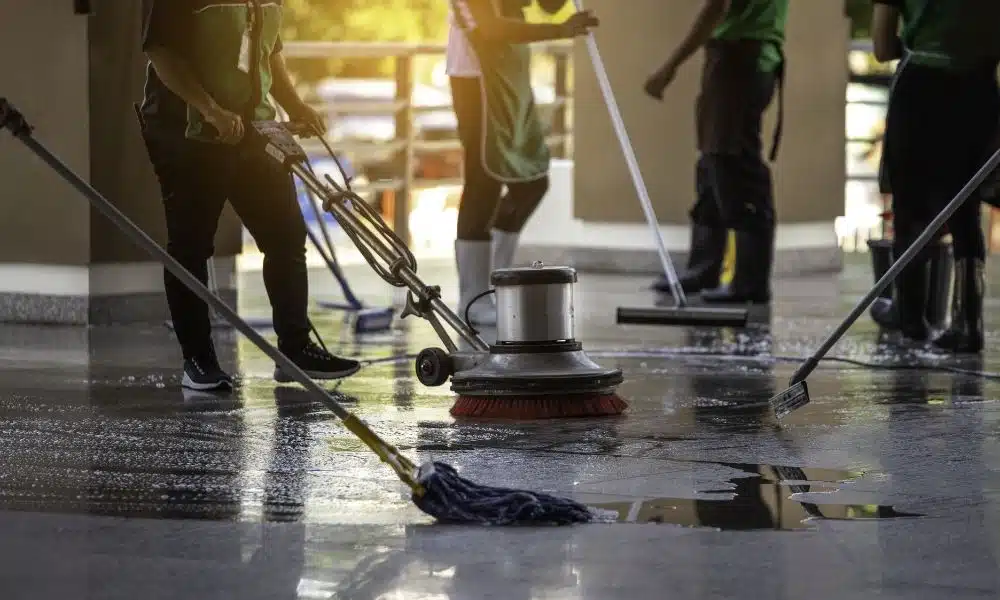
Routine tasks help keep the workplace presentable and comfortable for employees and visitors. These may include vacuuming carpets, mopping hard floors, dusting accessible surfaces, emptying bins, wiping frequently touched points and cleaning kitchens and washrooms.
The schedule should reflect how quickly different areas become dirty. A busy entrance may need attention more frequently than a meeting room used occasionally. Clear task lists help cleaning teams prioritise the areas that matter most.
Periodic and Deep Cleaning
Regular cleaning maintains everyday standards, while periodic work addresses areas that need more detailed attention. Depending on the building, this can include carpet extraction, internal glass cleaning, hard-floor treatment, high-level dusting and detailed washroom cleaning.
Planning these tasks in advance helps businesses manage costs and avoid scheduling disruptive work during particularly busy periods.
Additional Property Maintenance
As companies expand, they may also need support beyond routine office cleaning. Commercial window cleaning and wider facility management services can help businesses coordinate additional property maintenance requirements.
Using a planned approach to these services makes it easier to monitor outstanding work and maintain a consistent standard throughout the premises.
Keeping Cleaning Costs Under Control as Your Company Expands
Growth often brings increased operating costs, so businesses need to understand what they are paying for. The cheapest quotation is not necessarily the most cost-effective option if it excludes essential tasks or provides insufficient time to maintain the premises properly.
When comparing commercial cleaning proposals, look at the complete service rather than the hourly rate alone. Consider the tasks included, cleaning frequency, equipment, supervision, absence cover and any additional charges for periodic work.
A detailed quotation should make it clear what the business can expect and which services fall outside the agreed scope. This reduces misunderstandings and helps managers plan their budgets more accurately.
It is also worth reviewing the cleaning arrangement when the company adds staff, changes its layout or occupies additional space. Adjusting the schedule to reflect actual usage can help prevent both under-cleaning and unnecessary expenditure.
Minimising Disruption to Daily Operations
Cleaning should support business operations rather than interfere with them. For some workplaces, cleaning before employees arrive or after the working day ends is the most practical option. Other businesses may need daytime cleaning because their premises operate for extended hours.
A suitable schedule takes account of meetings, deliveries, customer visits and staff working patterns. Cleaning teams should also use appropriate signs and follow site procedures when working around employees or visitors.
For businesses with confidential work areas or restricted-access rooms, access arrangements should be agreed before the service begins. Clear instructions help protect workplace security while allowing cleaning staff to complete their responsibilities efficiently.
As the company develops, these arrangements should be reviewed to ensure they still fit its working patterns.
Choosing a Commercial Cleaning Provider
A growing business needs a cleaning provider that can respond to changing requirements without compromising service quality. Before appointing a company, ask about staff training, supervision, communication and the process for handling problems.
Different commercial environments present different risks. Cleaning products and methods should be suitable for the surfaces being treated, and staff should understand the relevant safety procedures. Businesses can consult the HSE COSHH guidance for information about managing risks associated with hazardous substances and cleaning products.
It is also useful to understand how the provider manages staff absences, reports completed work and responds to requests for additional cleaning. A named contact and a straightforward reporting process make it easier to resolve issues quickly.
For further background, businesses can review the GOV.UK workplace health and safety information and resources from the British Cleaning Council.
Measuring Quality and Reviewing the Service
A cleaning programme should be reviewed regularly rather than left unchanged after the initial agreement. Routine inspections, feedback from employees and records of outstanding tasks can help managers identify whether the service is meeting expectations.
The review should consider the condition of high-traffic areas, washroom standards, waste management, completion of scheduled tasks and the time taken to resolve reported problems.
If a company opens another department, introduces a new shift or increases its workforce, the cleaning schedule may need to change. Regular communication between the business and cleaning provider makes these adjustments easier to manage.
A practical review process also helps distinguish between a one-off issue and a recurring problem that requires a change to the service specification.
Commercial Cleaning Services That Grow With Your Business
Choosing commercial cleaning services is about more than keeping floors and surfaces clean. For growing London companies, a well-managed programme supports a professional workplace, helps maintain hygiene and provides a more reliable environment for employees, customers and visitors.
The most suitable arrangement is one that reflects the building’s needs today while allowing room for future changes. Clear responsibilities, realistic schedules, transparent pricing and regular quality checks all contribute to a dependable service.
Benchmark Cleaning provides tailored commercial cleaning services across London, with programmes designed around individual premises and operational requirements. Businesses can arrange a site visit and request a no-obligation quotation to discuss their cleaning needs.