High-level window cleaning requires careful planning, suitable access equipment and clear safety procedures. Cleaning windows on multi-storey offices, commercial buildings, schools and other large premises involves risks that cannot be managed through ordinary window cleaning methods alone. A safe approach begins with understanding the building, assessing the working environment and selecting the most appropriate method for reaching the glass.
Professional high-level window cleaning in London can help businesses maintain clean external glazing while protecting cleaners, building occupants and members of the public. The right method depends on window height, building design, ground conditions and the equipment available. Benchmark Cleaning provides commercial cleaning services across London, helping businesses arrange cleaning around their premises and operational requirements.
Why Safe Planning Matters for High-Level Window Cleaning
Work at height carries risks, particularly when cleaners need to reach windows above entrances, public footpaths, parking areas or busy commercial spaces. Poorly planned access, unsuitable equipment and changing weather conditions can increase the likelihood of accidents.
A well-prepared cleaning plan identifies potential hazards before work begins. It should explain how the windows will be accessed, what equipment is required, how the surrounding area will be protected and what precautions must be followed throughout the job.
The safest reasonably practicable method should be selected before work starts. Where windows can be cleaned from ground level using a suitable water-fed pole system, this may reduce the need to work at height. More complex buildings may require specialist access equipment and additional controls.
The objective is not simply to complete the cleaning quickly. It is to achieve the required standard while managing risks to everyone involved.
Assessing the Building Before Work Begins
Every building presents different challenges, so an initial site survey is an important part of planning high-level window cleaning.
The assessment should consider the height and layout of the windows, the condition of the glazing, access points, nearby structures and the space available for equipment. It should also identify entrances, pedestrian routes, parked vehicles, landscaping and other features that could affect the work.
Building managers should share relevant information about restricted areas, roof access, fragile surfaces and any existing access systems. If other contractors are working on site, the cleaning schedule may need to be coordinated with their activities.
The survey should establish which windows can be cleaned safely from the ground, which require internal access and which may need specialist methods. It should also identify any areas where cleaning cannot proceed until a hazard has been addressed.
A site-specific plan is more reliable than using the same method for every property.
Choosing the Right Window Cleaning Method
The most suitable access method depends on the building and the risks identified during the assessment. Equipment should be selected for the job rather than simply because it is familiar or readily available.
Water-Fed Pole Systems
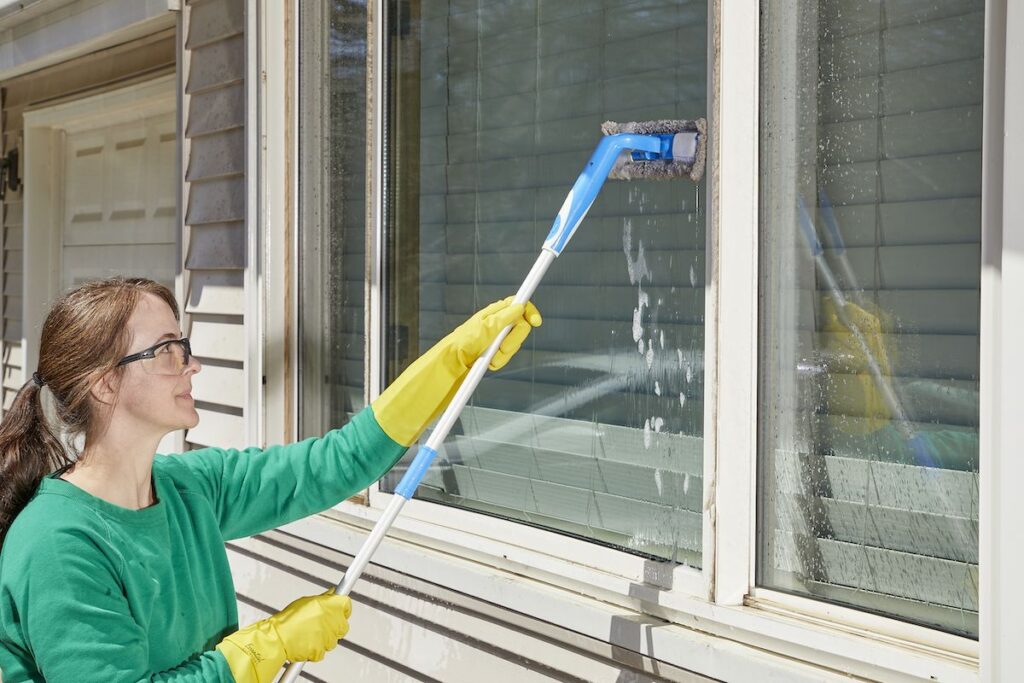
Water-fed poles allow trained operatives to clean many external windows from ground level or another suitable safe position. The system uses a brush and purified water to remove dirt from glass and frames.
Purified water helps reduce mineral deposits that can leave marks as the glass dries. The method can be particularly useful for buildings where windows are within the safe working reach of the equipment and ground access is available.
However, water-fed poles are not suitable for every property. Building height, window design, overhead services, surrounding obstacles and the condition of the glass must all be considered. Hoses should be managed carefully to avoid creating trip hazards, and runoff must not create unsafe walking surfaces.
Ladders and Other Access Equipment
Some windows cannot be reached effectively using a ground-based system. Depending on the site, a suitable platform or other specialist access equipment may be required.
Ladders should not be treated as the automatic solution to high-level cleaning. Their use must be justified by the task and supported by an appropriate risk assessment, equipment checks and competent workers.
Where specialist access equipment is needed, the plan should cover safe positioning, stability, inspection, operator competence and protection for people nearby. The equipment must be appropriate for the working conditions and the building’s physical layout.
Specialist Access for Difficult Locations
Complex façades, roof-level glazing and windows above restricted areas may require specialist arrangements. These jobs should be assessed by competent professionals who understand the equipment, access requirements and associated risks.
The method statement should clearly explain how the work will be carried out, how hazards will be controlled and what arrangements are in place if an emergency occurs. If the proposed method cannot be carried out safely, the work should be reconsidered rather than proceeding with inadequate precautions.
Preparing a Risk Assessment and Method Statement
A risk assessment should identify the hazards associated with the actual building and cleaning task. A method statement should then explain the practical steps workers will follow to complete the job safely.
Depending on the site, the documents should address:
- Window height, building layout and access limitations.
- The selected cleaning method and equipment.
- Equipment inspection and maintenance requirements.
- Training and competence of the cleaning team.
- Protection for pedestrians, staff, vehicles and visitors.
- Weather conditions and circumstances requiring work to stop.
- Safe handling of cleaning products and water.
- Communication procedures and emergency arrangements.
The assessment should be reviewed when conditions change, equipment is replaced or new information becomes available. A previous assessment may provide a useful starting point, but it should not be assumed to cover a different building or a different access method.
Businesses can consult the HSE guidance on working at height for information about preventing falls and selecting appropriate precautions.
Protecting Pedestrians and Building Occupants
High-level window cleaning can affect people who are not involved in the work. Pedestrians may pass beneath the windows, employees may use nearby entrances, and vehicles may move through the surrounding area.
The cleaning plan should explain how these people will be protected. Depending on the site, measures may include barriers, warning signs, controlled access routes, a designated work area or adjustments to the cleaning schedule.
Equipment, tools and materials must be secured appropriately to reduce the risk of items falling. Hoses should not obstruct walkways, and cleaning water should be managed to prevent slippery surfaces from developing.
If an entrance or footpath needs to be temporarily restricted, building management should be informed in advance. Emergency exits must remain accessible, and the cleaning team should know how to respond if an unexpected hazard develops.
These arrangements are especially important for commercial premises with high pedestrian traffic or entrances that cannot easily be closed.
Considering Weather and Environmental Conditions
Weather can affect both the safety and quality of high-level window cleaning. Strong winds may make certain access methods unsafe, while rain, ice or poor visibility can affect equipment positioning and working conditions.
The site plan should specify the conditions under which work can proceed and the circumstances requiring a pause or cancellation. These decisions should follow the equipment manufacturer’s instructions, the risk assessment and the judgement of the responsible supervisor.
Temperature and sunlight may also influence cleaning results. Direct sunlight can cause water to dry quickly on some surfaces, potentially leaving marks if the cleaning method is not adjusted.
Water runoff needs consideration too. Dripping water may affect entrances, pedestrian routes or electrical equipment, while poorly managed drainage can create hazards around the building.
Checking conditions before work begins and monitoring them during the task helps the team respond to changing risks.
Training, Equipment and Cleaning Products
Safe high-level window cleaning depends on trained workers who understand the selected method and the limits of their equipment. Staff should know how to inspect equipment, recognise hazards, follow the method statement and report unsafe conditions.
Any specialist access system must be operated by appropriately competent personnel. Equipment should be maintained and inspected according to relevant requirements and manufacturer instructions.
Cleaning products also need careful handling. Workers should understand the correct dilution, application and storage procedures, particularly when chemicals are used on elevated surfaces where runoff may affect people or materials below.
The HSE COSHH guidance explains how risks from hazardous substances can be assessed and controlled. Businesses should ensure that relevant product safety information and precautions are available to the people carrying out the work.
Appropriate training, suitable equipment and clear supervision all contribute to a safer and more consistent service.
How Often Should High-Level Windows Be Cleaned?
Cleaning frequency depends on the building’s location, the surrounding environment and the standard of presentation required. Properties near busy roads may accumulate traffic film and airborne dirt more quickly than buildings in quieter locations. Exposed façades can also be affected by rain, wind and environmental deposits.
Some commercial premises benefit from scheduled cleaning several times a year, while others may require more frequent visits because of their use or appearance requirements. There is no single frequency that suits every building.
A maintenance schedule should identify priority windows, expected cleaning intervals and any access requirements that need to be arranged in advance. Regular inspections can help determine whether the schedule remains appropriate as conditions change.
Planned visits can also make it easier to coordinate access equipment, notify occupants and avoid unnecessary disruption to business activities.
Choosing a Professional High-Level Window Cleaning Company
When comparing providers, businesses should look for a clear understanding of site safety as well as cleaning quality. Ask how the company assesses access, selects equipment and protects people around the building.
It is also sensible to confirm relevant insurance, staff competence, equipment inspection procedures and supervision arrangements. For work involving specialist access, request details of the proposed method and the risk assessment before the job begins.
The quotation should explain which windows are included, the proposed cleaning method, the expected schedule and any additional requirements. If access restrictions or building conditions could affect the result, these should be discussed before work starts.
Benchmark Cleaning offers commercial window cleaning services across London. Businesses with complex buildings can discuss their requirements and arrange a site assessment to establish a suitable cleaning approach.
For wider building maintenance, facility management services may also help coordinate cleaning and other premises-related requirements.
Monitoring Standards and Reviewing the Plan
A safe cleaning programme should be reviewed after the work is completed and whenever significant conditions change. Managers can check whether the agreed areas were cleaned, whether access arrangements worked as planned and whether any unexpected hazards arose.
Issues such as difficult access, recurring water runoff or restricted pedestrian routes should be recorded and considered before the next visit. If the building layout changes or new equipment is proposed, the risk assessment may need updating.
Communication between the cleaning provider and building manager helps resolve concerns and keeps future visits organised. A clear record of completed work, outstanding issues and planned maintenance also supports more consistent service delivery.
The British Cleaning Council provides additional background on the professional cleaning industry, while the GOV.UK workplace safety information offers further context on workplace health and safety responsibilities.
Planning High-Level Window Cleaning Safely
High-level window cleaning requires more than the right equipment. A successful job depends on understanding the building, selecting an appropriate access method, preparing a site-specific risk assessment and protecting everyone who may be affected by the work.
Benchmark Cleaning provides commercial cleaning services across London and can help businesses assess their window cleaning requirements. By arranging a site visit, discussing access limitations and agreeing on a suitable maintenance schedule, property managers can plan the work around their building’s needs.
Contact Benchmark Cleaning to discuss high-level window cleaning for your premises and request a free, no-obligation quotation.