A reliable restaurant and bar cleaning London after-service plan helps hospitality businesses prepare their premises for the next day. Once customers leave, attention turns to clearing tables, cleaning bar counters, removing food residue, addressing spills and maintaining kitchen and washroom hygiene. Benchmark Cleaning has supported London businesses for more than 20 years, offering commercial cleaning services for hospitality venues and other premises. A tailored schedule helps identify the tasks that must be completed after closing, the areas needing deeper attention and the work that can be planned for quieter periods.
Why after-service cleaning matters
Restaurants and bars can accumulate grease, food crumbs, drink spills and waste during a busy service. If these are left untreated, they can create unpleasant odours, affect the appearance of the venue and make the next day’s preparation more difficult. A consistent after-service routine helps staff maintain cleaner surroundings and ensures that important tasks are completed before the premises reopen.
Start with the areas used during service
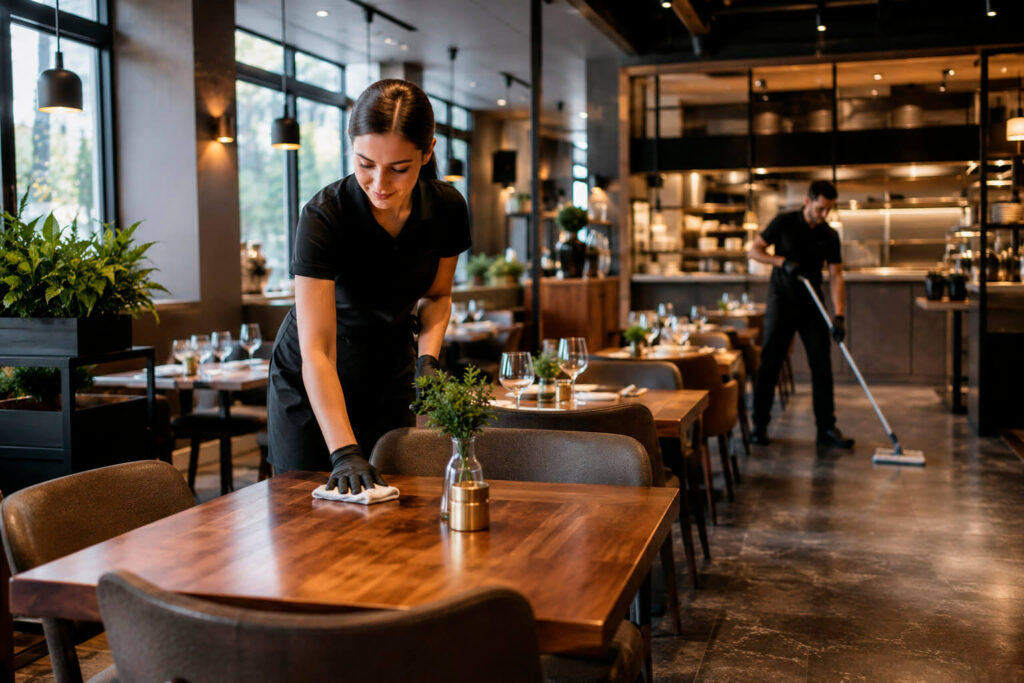
The first step is to identify which areas need attention after customers leave. Dining tables and seating require cleaning, while bar counters may need treatment for sticky residues and drink spills. Kitchens need appropriate cleaning of food preparation surfaces and equipment, and toilets require thorough checks. Floors, entrances and waste collection points should also be included. The schedule should reflect the venue’s layout, closing time and the level of activity during service.
What should an after-service cleaning plan include?
A clear specification should identify the tasks required, who is responsible for completing them and how the results will be checked. Depending on the premises, this may include clearing tables, cleaning counters, wiping suitable surfaces, mopping floors, cleaning washrooms, emptying bins and maintaining kitchen areas. Periodic work can cover carpets, internal glass, hard-floor care and deeper cleaning of areas that accumulate grease or grime.
- Dining areas: Clear tables, remove crumbs and clean surfaces before the next service.
- Bar counters: Remove drink spills and sticky residue from suitable surfaces.
- Kitchens: Clean designated work surfaces and equipment according to food hygiene procedures.
- Washrooms: Clean toilets, basins, taps and frequently touched surfaces, and check supplies.
- Floors and waste: Remove debris, clean spills and dispose of waste using the venue’s procedures.
- Quality checks: Review completed tasks and report any outstanding issues.
Questions to ask before arranging after-service cleaners
Are the cleaners trained for hospitality environments?
Restaurants and bars have specific cleaning requirements because food, drinks and grease can affect different surfaces throughout the premises. Ask how cleaners are trained, how suitable products are selected and how the company manages COSHH information. Cleaning teams should understand safe chemical handling and follow the venue’s health and safety procedures. It is also worth confirming who supervises the work and how cover is arranged if a cleaner is absent.
How is cleaning quality measured?
An effective after-service clean should follow an agreed checklist rather than relying on a general impression that the venue looks tidy. Ask whether the provider checks completed tasks, records outstanding work and has a clear reporting process. A review after the first few visits can identify whether the schedule covers all priority areas. Regular communication also helps managers adjust the plan when service hours, customer numbers or operational requirements change.
Useful guidance and related services
Restaurants and bars can review pub cleaning London options alongside the wider commercial window cleaning service and facility management support. For further information about safe cleaning practices, consult the HSE COSHH guidance, GOV.UK workplace safety information and the British Cleaning Council. These resources provide useful background on workplace safety, chemical handling and the professional cleaning industry.
Final thoughts
Choosing restaurant and bar cleaning London services means finding a provider that understands the demands of cleaning after service. Dining areas, bar counters, kitchens, toilets and floors all need appropriate attention before the next trading day. A well-managed cleaning plan supports hygiene, keeps the premises presentable and helps staff begin their next shift in a cleaner environment. Benchmark Cleaning offers tailored commercial cleaning across London, with a free site visit and no-obligation quotation available through its contact team.
Putting the after-service plan into practice
Before the cleaning team begins, agree which tasks must be completed every evening and which can be scheduled less frequently. Identify the areas customers use most, the surfaces that come into contact with food or drinks and the facilities that need particular attention. This gives cleaners a clear brief and helps managers check whether the required work has been completed.
Cleaning should fit around closing procedures, food storage, deliveries and security arrangements. Tables can be cleared once customers have finished, while kitchen cleaning should follow the venue’s food safety procedures. Spills should be addressed promptly, and wet floors should be managed with suitable warning signs and safe working practices. The schedule should be reviewed when opening hours, menus or customer numbers change.
Keep communication simple
A named contact, a clear reporting route and regular inspections help maintain consistent standards. If a spill, damaged surface, equipment issue or additional cleaning requirement arises, the team should know how to report it. Short reviews can cover completed tasks, outstanding work, cleaning supplies and any upcoming events that may affect the schedule. This feedback helps resolve problems before they become recurring issues.
Balance routine cleaning with periodic detail
After-service cleaning addresses everyday dirt and spills, while periodic deep cleaning tackles accumulated grime in less accessible areas. Depending on the venue, this may include carpet cleaning, detailed floor care, internal glass and more intensive cleaning of suitable kitchen and washroom areas. Planning this work in advance helps managers budget for it and reduces disruption during busy trading periods.
When comparing providers, consider the agreed scope, staff training, equipment, supervision, cover arrangements and quality checks rather than focusing only on the hourly rate. A dependable service should explain which tasks are included and tailor the schedule to the premises. This approach helps restaurants and bars maintain cleaner facilities and prepare more efficiently for each new service.