Surgery and Hospital Cleaning: What Good Practice Looks Like
Surgery and hospital cleaning requires a carefully planned approach that reflects the needs of patients, healthcare staff and visitors. Unlike general commercial premises, healthcare environments may contain clinical areas, waiting rooms, treatment spaces and shared facilities that require different cleaning procedures and levels of attention.
Good practice begins with a clear cleaning specification, trained staff and an understanding of the healthcare setting. Cleaning must follow the relevant infection prevention and control procedures established by the healthcare provider, with particular attention to frequently touched surfaces, patient-facing areas and the safe handling of cleaning products.
Benchmark Cleaning provides cleaning services across London, including support for commercial and specialist premises. For surgeries and hospitals, the cleaning programme should be designed around the building, its daily activities and the requirements of the healthcare team.
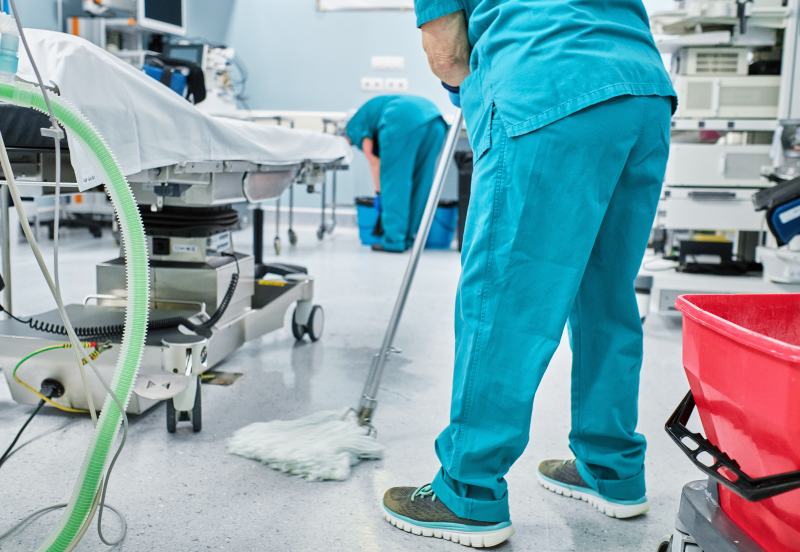
Why Good Cleaning Practice Matters in Healthcare
Clean surroundings help healthcare providers maintain a professional environment and support their wider infection prevention and control arrangements. Patients may be anxious when attending an appointment, so a clean reception, tidy waiting room and well-maintained facilities can also make their visit more comfortable.
Healthcare premises experience different types of activity throughout the day. Patients move between reception areas, waiting rooms and consultation spaces, while staff use shared equipment, corridors, washrooms and clinical rooms. These areas do not all have identical cleaning requirements.
A documented cleaning plan helps establish responsibilities, task frequencies and procedures for checking completed work. It should also explain how urgent cleaning requests are reported and how the cleaning team coordinates with healthcare staff.
Assessing the Surgery or Hospital Before Cleaning Begins
The first step is to understand the building and how each area is used. A site assessment should identify the rooms included in the service, the surfaces and equipment that require attention, the expected footfall and any restrictions on access.
The healthcare provider should identify which areas are clinical and which are non-clinical. Cleaning requirements for a treatment room may differ significantly from those for an administrative office or public corridor.
The assessment should consider:
- Reception desks, entrances and patient waiting areas.
- Consultation rooms and treatment spaces.
- Corridors, stairways and other shared routes.
- Patient and staff washrooms.
- Staff kitchens and administrative areas.
- Waste collection points and storage arrangements.
- Areas requiring restricted access or specialist procedures.
The resulting cleaning specification should reflect the requirements of the individual facility. It should not rely on a generic office-cleaning schedule that overlooks healthcare-specific risks.
Cleaning Clinical and Non-Clinical Areas
A good cleaning programme distinguishes between clinical areas and spaces used primarily by visitors or administrative staff. Each area should have an agreed procedure, suitable cleaning products and an appropriate schedule.
Consultation Rooms and Treatment Areas
Consultation rooms and treatment areas may involve close contact with patients and the use of clinical equipment. Cleaning arrangements should therefore follow the healthcare provider’s infection prevention and control procedures.
Frequently touched surfaces, such as door handles, worktops and other appropriate contact points, should receive attention according to the agreed protocol. Surfaces must be compatible with the cleaning and disinfecting products being used, and the manufacturer’s instructions should be followed.
Cleaning staff should understand which equipment they are authorised to clean and which items must be handled by clinical personnel. They should never assume that all equipment or surfaces can be treated in the same way.
Where a room requires additional cleaning following a particular clinical activity or contamination event, the agreed escalation procedure should be followed before the space is returned to use.
Reception and Waiting Rooms
Reception desks and waiting rooms are often among the busiest parts of a surgery or hospital. Patients and visitors may spend considerable time in these spaces, making regular attention important.
Cleaning tasks may include maintaining floors, wiping suitable surfaces, emptying bins and cleaning frequently touched points. Seating, entrance doors and accessible glass should also be checked as part of the routine.
The cleaning schedule should account for patient appointments and opening hours. Where cleaning takes place while the facility is operating, staff should minimise disruption and use suitable signs or barriers whenever a temporary hazard is present.
Washrooms and Shared Facilities
Patient and staff washrooms require a clear routine covering toilets, basins, taps, dispensers, floors and other relevant surfaces. The schedule should also include checks on soap, paper products and other agreed consumables.
Shared facilities such as staff rooms and kitchens should be cleaned according to their use and the surfaces involved. Cleaning equipment and materials should be managed appropriately to avoid transferring contamination between different areas.
Establishing the Right Cleaning Frequency
Cleaning frequency should reflect the type of area, its usage and the healthcare provider’s requirements. A single schedule is unlikely to be suitable for every room in a large facility.
High-traffic entrances, waiting areas and washrooms may require attention several times throughout the day. Clinical spaces should follow their specified cleaning procedures and any additional requirements associated with the activities taking place there.
Other tasks, such as detailed cleaning of less frequently used areas, internal glass cleaning and periodic floor maintenance, can be scheduled according to the facility’s needs.
The cleaning plan should specify which tasks are required, when they must be completed and who is responsible. It should also allow for additional cleaning when unexpected circumstances arise.
Regular reviews are important because patient numbers, appointment patterns and the use of particular rooms can change. The schedule should be adjusted when these changes affect cleaning requirements.
Staff Training and Safe Cleaning Procedures
Cleaning staff working in healthcare settings need clear instructions about the environment, their responsibilities and the procedures they must follow. Training should reflect the facility’s requirements rather than rely solely on general commercial cleaning experience.
Staff should understand how to use cleaning products safely, how to follow agreed cleaning sequences and how to manage equipment between different areas. They should also know which tasks fall outside their responsibilities and when to contact a supervisor or healthcare employee.
The HSE COSHH guidance explains how risks associated with hazardous substances can be assessed and controlled. Cleaning providers should ensure that relevant product information, handling instructions and protective measures are available to staff.
Workplace procedures should also cover safe storage, the use of suitable equipment and the reporting of spills or other hazards. Healthcare staff and cleaners need a clear process for dealing with incidents that require immediate attention.
Managing Waste and Cleaning Equipment
Waste arrangements should be agreed with the healthcare provider before cleaning begins. Different types of waste may require different handling procedures, and cleaning staff should follow the facility’s policies rather than make assumptions about disposal.
Clinical or potentially infectious waste must be managed in accordance with the relevant healthcare procedures. Cleaning personnel should know which waste they are authorised to handle and when specialist staff must take responsibility.
Equipment and cleaning materials should also be suitable for the areas where they are used. The facility’s procedures should explain how equipment is cleaned, stored and managed to reduce the risk of cross-contamination.
Clear arrangements for waste collection, equipment storage and replenishment help keep work areas organised and reduce avoidable disruption.
Coordinating Cleaning Around Patient Care
Cleaning must fit around appointments, treatment schedules and the daily responsibilities of healthcare staff. Poorly timed work can interrupt consultations or make important rooms temporarily unavailable.
Before the service begins, the cleaning provider and healthcare manager should agree on access arrangements, preferred working times and procedures for entering occupied or restricted rooms.
Some routine tasks may be completed before opening or after appointments finish. Other tasks may need to take place during the day, with suitable coordination to ensure patient movement and clinical activities can continue safely.
Cleaning staff should understand how to communicate with the person responsible for the area and how to respond when a room is in use. They should not enter restricted spaces or handle clinical materials without appropriate authorisation.
Choosing a Healthcare Cleaning Provider
Selecting a suitable provider involves more than comparing quotations. Healthcare facilities should assess whether the company understands the setting, can follow the required procedures and has a reliable system for training, supervision and quality control.
Before appointing a provider, ask how staff are prepared for healthcare environments, how cleaning tasks are documented and how urgent requests are handled. It is also important to establish who supervises the service and how staff absence is covered.
The quotation should clearly define the areas included, task frequencies, working hours and any specialist services. Responsibilities for supplies, equipment and additional cleaning should also be explained.
Healthcare providers can review hospital cleaning services when considering suitable support for their premises. For wider property requirements, commercial window cleaning and facility management services may also be relevant.
For additional workplace safety information, businesses can consult the GOV.UK health and safety guidance and resources from the British Cleaning Council.
Monitoring Standards and Reviewing Performance
A healthcare cleaning programme should include a consistent process for checking that the agreed work has been completed. Managers and cleaning supervisors should know how inspections are carried out, how concerns are recorded and who is responsible for resolving problems.
Reviews can examine task completion, the condition of patient-facing areas, the availability of agreed supplies and any recurring cleaning issues. Where a problem is identified, the corrective action should be recorded and followed up.
Communication is particularly important when a healthcare facility changes its opening hours, adds treatment rooms or experiences a change in patient activity. Regular discussions help ensure that the cleaning specification continues to reflect operational needs.
Documentation also provides a clearer record of responsibilities and helps the facility identify areas where the schedule or working arrangements need improvement.
Building a Reliable Surgery and Hospital Cleaning Plan
Good practice in surgery and hospital cleaning depends on a tailored programme, trained personnel, safe procedures and effective communication with healthcare staff. Clinical and non-clinical areas need appropriate cleaning arrangements, while task frequencies should reflect how the premises are used.
A well-managed service supports the facility’s wider hygiene and infection prevention measures without disrupting patient care. Clear specifications, regular inspections and a reliable process for addressing concerns help maintain consistent standards.
Benchmark Cleaning offers tailored cleaning services across London. Healthcare providers can arrange a site visit and request a no-obligation quotation to discuss their premises, cleaning requirements and preferred schedule.