
How To Plan A Cleaning Rotation That Works For Everyone
Keeping a home or office clean might seem simple, but anyone who has tried knows it can be tricky. Dirty offices, missed spots, unreliable cleaners, and inconsistent results are common frustrations. A messy workspace or home can make people feel stressed, unhealthy, or even embarrassed when visitors come. For businesses seeking professional help, Corporate cleaning services can provide expert support to keep spaces fresh, organized, and healthy.
The good news? With the right cleaning rotation plan, you can solve these problems. This guide will show you how to plan a cleaning rotation that works for everyone, saving time, reducing stress, and keeping your space clean and fresh.
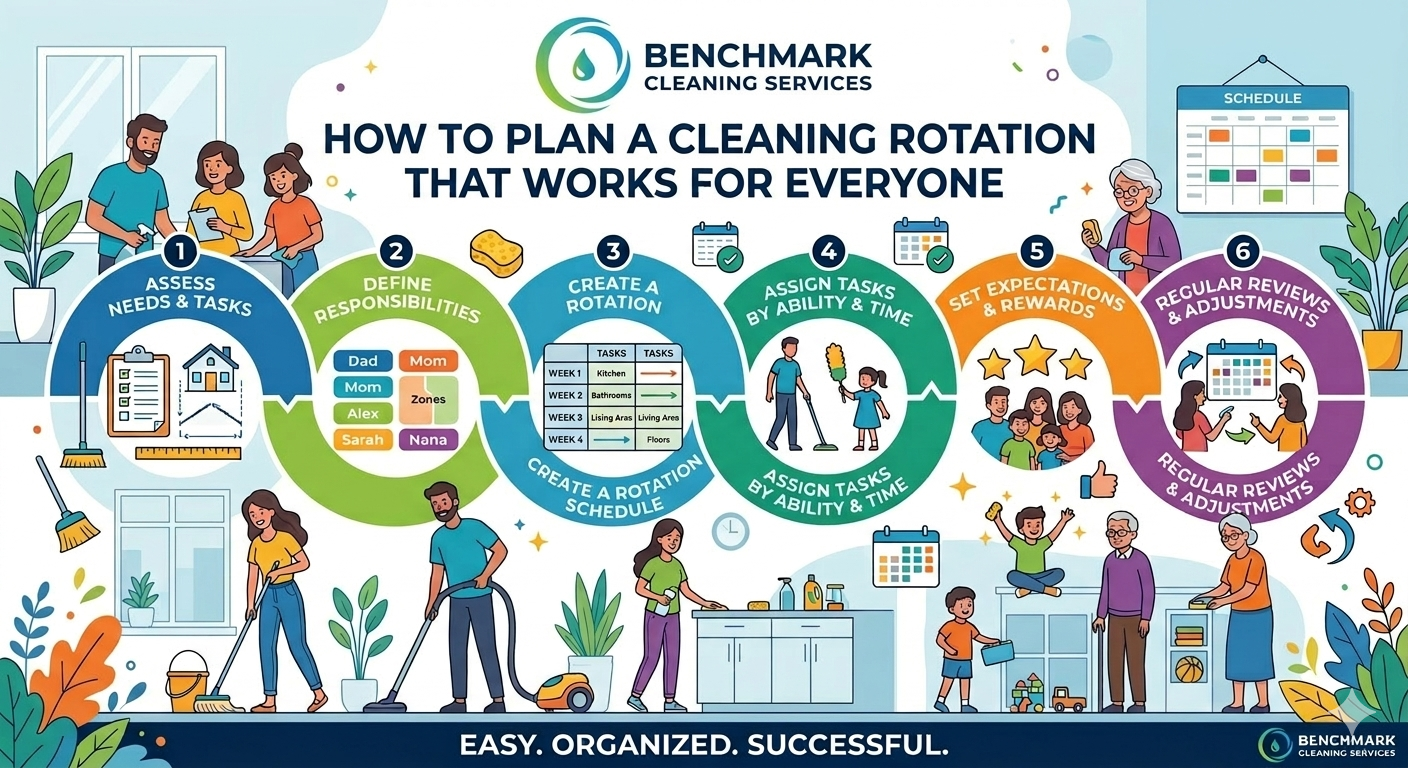
Why a Cleaning Rotation Matters
A cleaning rotation is more than just a chore list. It’s a structured schedule or system that organizes tasks like dusting, mopping, disinfecting, and tidying into a workflow everyone can follow.
Without a rotation, cleaning becomes inconsistent. Some areas may never get cleaned, while others are cleaned too often. This can lead to:
Unhealthy environments with germs and dust
Frustration from repeated cleaning mistakes
Wasted time and money hiring unreliable cleaning services
A proper rotation plan ensures that all tasks are completed regularly, making your home or office healthier and more welcoming.
Step 1: Identify Cleaning Needs
The first step in planning a rotation is to identify all cleaning needs. Think about what areas need attention and what tasks must be done. For example:
Offices: desks, chairs, floors, restrooms, kitchens, shared equipment
Homes: bedrooms, bathrooms, kitchen, living areas, entryways
Recurring tasks: dusting, vacuuming, scrubbing, mopping, disinfecting
Ask yourself: Which tasks are daily, weekly, or monthly? Knowing this will help you design a cleaning schedule that covers all areas efficiently.
Step 2: Assign Tasks Fairly
Once you know the tasks, it’s important to assign duties fairly. A rotation plan works best when all participants know their responsibilities. Consider:
Team members: office staff, household members, cleaning staff
Skill level and availability: assign tasks based on strengths and time
Rotation sequence: change assignments periodically to keep things balanced
This ensures everyone participates and no one feels overwhelmed. A fair duty rotation builds accountability and makes the cleaning process smoother.
Step 3: Choose a Rotation System
There are several ways to organize a cleaning rotation. The key is to pick a system that fits your environment and team. Some examples:
Daily rotation: Each person has a daily task list
Weekly rotation: Tasks are divided weekly among all participants
Task-based rotation: Rotate specific tasks like vacuuming or mopping
The right workflow loop ensures tasks are completed regularly and nothing is forgotten. You can use calendars, task lists, or apps to make the process simple and trackable.
Step 4: Create a Clear Cleaning Schedule
A cleaning rotation is only effective if it’s easy to follow. Create a visual cleaning schedule or roster with clear instructions. Include:
Task description (dusting, scrubbing, disinfecting)
Assignment order (who does what)
Frequency (daily, weekly, monthly)
Completion check (signature, checkbox, or app update)
A well-structured cleaning timetable eliminates confusion and makes it easier to hold participants accountable.
Step 5: Set Realistic Expectations
One of the biggest frustrations with cleaning is expecting too much. Overloading a schedule can lead to missed spots, low performance, and unhappiness.
Set realistic expectations by:
Estimating the time each task takes
Scheduling breaks for larger spaces
Prioritizing high-traffic areas
Planning extra cleaning during busy seasons
This improves workflow efficiency and ensures cleaning is manageable for everyone involved.
Step 6: Communicate Clearly
A cleaning rotation only works if everyone understands it. Clear communication is essential. Use:
Meeting or briefing sessions for staff or household members
Instruction sheets or guides for each task
Digital reminders or notifications to keep everyone on track
Communication reduces confusion, prevents missed spots, and ensures a smooth cleaning schedule implementation.
Step 7: Monitor and Adjust
Even the best cleaning rotation plan may need tweaks. Monitor progress and gather feedback. Ask questions like:
Are all areas being cleaned properly?
Are any tasks too frequent or too hard?
Is the team satisfied with their assignments?
Based on feedback, adjust the rotation plan, task sequence, or workflow loop. Continuous improvement ensures long-term success and satisfaction for all participants.
Benefits of a Well-Planned Cleaning Rotation
When you follow a structured rotation plan, everyone wins. Some of the key benefits include:
1. Cleaner and Healthier Environment
Regular dusting, disinfecting, and mopping reduce germs, allergens, and bacteria. This promotes a healthy workspace or home, lowering sick days and improving overall wellness.
2. Reduced Stress and Frustration
No more chasing people to clean or dealing with unfinished chores. A clear schedule makes cleaning stress-free and predictable.
3. Time and Cost Efficiency
A structured plan helps you save time and reduces the need for costly last-minute cleaning services. Everyone knows their duties, and tasks are completed efficiently.
4. Improved Professional Image
A consistently clean office impresses clients and visitors. It shows your commitment to organization and hygiene, strengthening trust and reputation.
5. Increased Accountability
A transparent rotation and check system ensures everyone does their part, eliminating complaints and resentment.
Tips for Success
To make your cleaning rotation effective:
Keep it simple: Avoid overly complex schedules.
Use visual aids: Charts, calendars, and apps help everyone see their tasks.
Reward consistency: Recognize team members who consistently follow the rotation.
Provide guidance: Share step-by-step instructions for tricky tasks.
Maintain flexibility: Allow swaps or adjustments when needed.
By following these tips, your cleaning rotation methodology will remain practical, operational, and successful for all participants.
Key Features of an Effective Cleaning Rotation
Structured workflow: Clearly defined duties and sequence
Recurring schedule: Daily, weekly, and monthly tasks
Rotation system: Fair assignment order for all participants
Tracking and accountability: Checklists or apps
Flexibility: Adjustments for absences or special circumstances
These features ensure maximum efficiency, hygiene, and satisfaction for all users.